

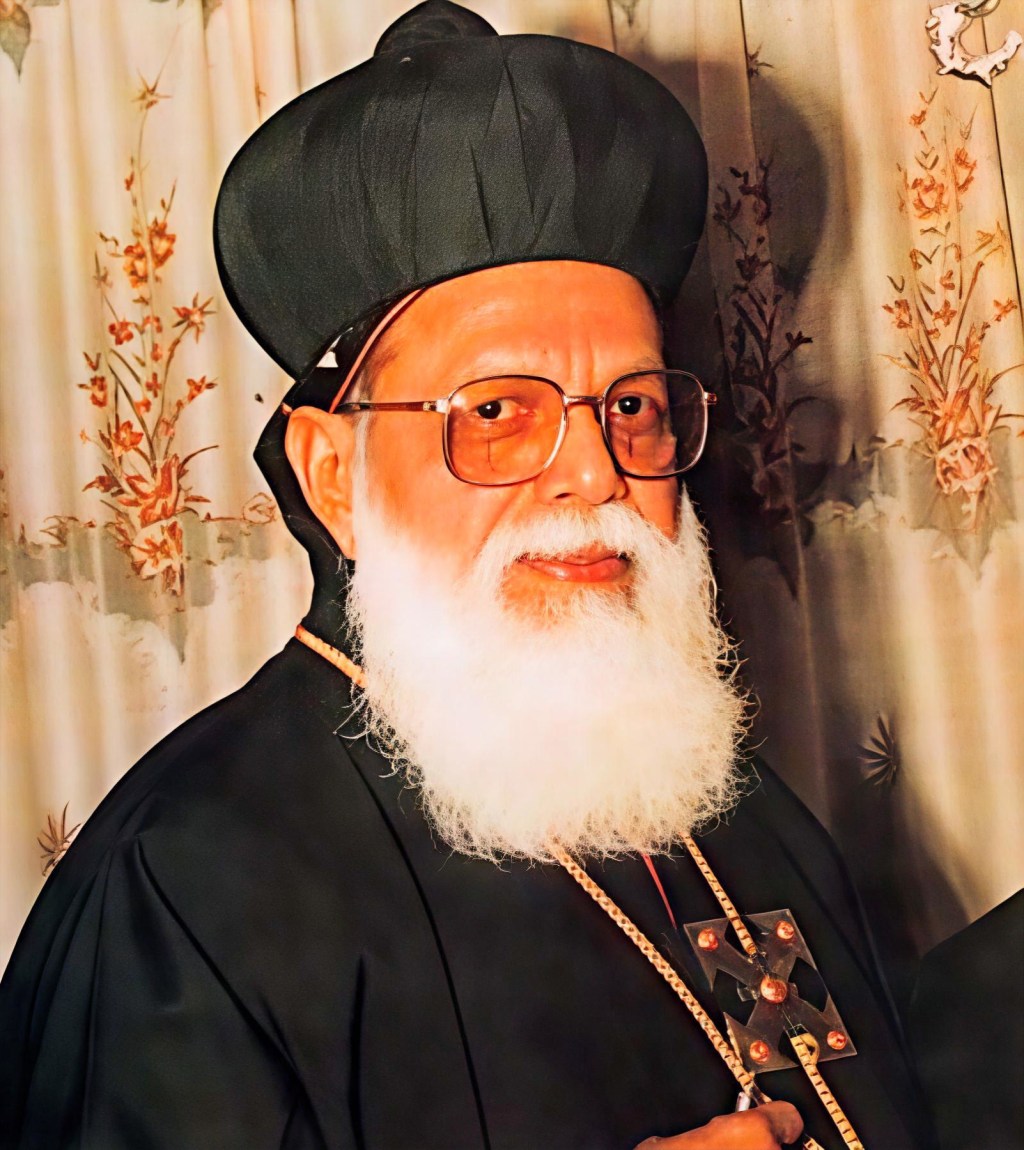
Late Lamented His Grace Dr. Philipose Mar Theophilos Metropolitan
The Ambassador of the Malankara Church
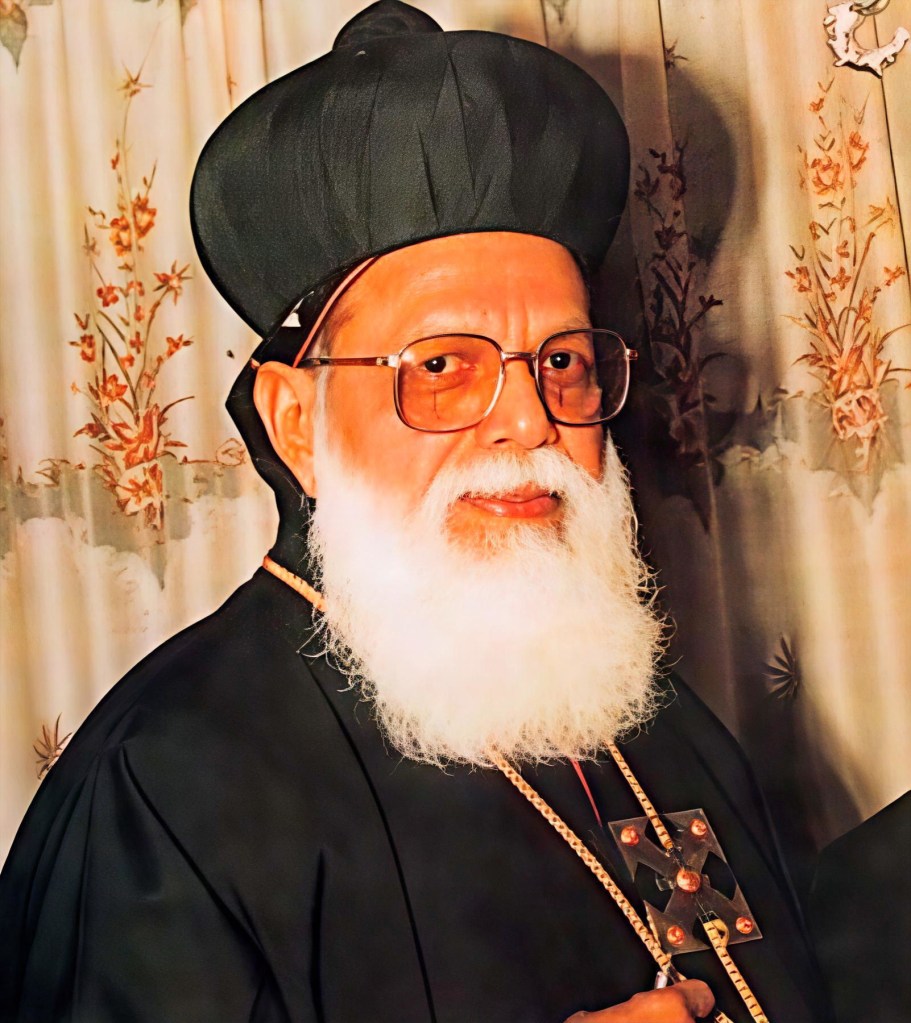
H. G. Dr. Philipose Mar Theophilos Metropolitan, thirumeni is widely remembered as the “Ambassador of the Malankara Orthodox Syrian Church”, a title earned not merely through travel or diplomacy, but through the depth and balance of his contribution to both the inner life of the Church and its global Christian engagement. His legacy stands at the intersection of tradition and modernity—where priestly formation was renewed at home, and ancient Oriental Orthodoxy found a confident, respected voice on the world stage.
Two arenas, in particular, define his enduring impact: his transformational leadership at the Orthodox Theological Seminary and his pioneering role in the World Council of Churches (WCC). Together, these reveal a leader who understood that the future of the Church depended equally on educated clergy and credible ecumenical witness.
Reforming Priesthood: Leadership at the Orthodox Theological Seminary (1965–1967)
Although Dr. Philipose Mar Theophilos thirumeni served as Principal of the Orthodox Theological Seminary, Kottayam, for only a brief period (1965–1967), his tenure marked a decisive transitional era. He inherited an institution rooted in venerable tradition, yet not fully structured to meet the intellectual and pastoral challenges of a changing world. What he accomplished in those few years reshaped the Seminary permanently.
Academic Reformer and Architect of Modernization
Prior to his leadership, theological training followed a largely informal pattern. Mar Theophilos introduced systematic academic structures, revamped the curriculum, and professionalized faculty appointments—particularly in Systematic Theology and Biblical Studies. In doing so, he preserved Orthodox spirituality while aligning priestly formation with international academic standards.
Serampore Affiliation: A Historic Milestone
One of his most far-reaching achievements was securing Serampore University affiliation for the Seminary’s B.D. programme in 1964. This transformed the Seminary from a local clerical training centre into an internationally recognized theological institution, opening new horizons for Orthodox clergy and scholarship.
Infrastructure, Discipline, and Mentorship
He oversaw the shift of classes to the new MD Seminary campus buildings and chose to live on campus himself. This decision fostered a close mentor–student relationship and earned him the reputation of an “emulative teacher”—one whose life, discipline, and humility became as instructive as his lectures.
The “Golden Duo” with Paulos Mar Gregorios
His vision reached lasting fulfillment through close collaboration with H.G. Dr. Paulos Mar Gregorios. Often described as a “Golden Duo”, the two complemented each other remarkably:
- Mar Gregorios as the philosopher-theologian,
- Mar Theophilos as the administrator-diplomat.
Together, they laid the foundation for the Seminary’s emergence as a centre for ecumenical theological dialogue in India.
A Global Witness: Leadership in the World Council of Churches
Dr. Philipose Mar Theophilos thirumeni belonged to the pioneer generation of the World Council of Churches, participating in its first Assembly at Amsterdam (1948) and the second at Evanston (1954). His presence ensured that the ancient faith of the Malankara Church was represented with theological depth and historical integrity.
Theological Contributions
Among his more than thirty scholarly papers, his most influential work, “The Fathers on the Holy Eucharist,” stands out. Drawing deeply from the Early Church Fathers, he articulated an Orthodox understanding of the Eucharist as communal sacrifice and heavenly nourishment, helping bridge theological gaps between Orthodox, Protestant, and other Christian traditions within the WCC.
Secretary of the Faith and Order Commission
As Secretary of the Faith and Order Commission, Mar Theophilos thirumeni contributed to key discussions on Apostolicity and Catholicity, clarifying how ancient Oriental churches could remain faithful to apostolic tradition while engaging responsibly in a modern ecumenical framework. His legal scholarship, reflected in his book “Legislative Principles and Judicial Process,” further enriched his vision of how Church law should interact wisely with secular legal systems.
The Eastern Europe Mission: A Quiet Turning Point
One of his most decisive contributions came through a diplomatic mission in the 1950s, when he became the first WCC official to visit Eastern Orthodox churches behind the Iron Curtain—including Russia, Romania, Bulgaria, and Serbia. His reports to the WCC Central Committee testified to the spiritual vitality of these churches despite political oppression.
These insights directly contributed to the Russian Orthodox Church joining the WCC in 1961, transforming the Council into a truly global Christian forum. This achievement alone secures his place as a historic bridge between Oriental Orthodoxy, Eastern Orthodoxy, and Western Christianity.
Enduring Legacy: From Seminary to City Streets
The legacy of Dr. Philipose Mar Theophilos thirumeni is not just confined to books, institutions, or assemblies. In Vashi, Navi Mumbai, where he established the Bombay Diocese headquarters and nurtured a strong Orthodox presence, a major road has been officially named “Philipose Mar Theophilos Road.” This public recognition stands as a rare civic tribute to a church leader—testifying that his influence extended beyond ecclesiastical boundaries into the social and cultural life of the city.
His name, inscribed on a public roadway, symbolically reflects the path he himself walked: connecting people, traditions, nations, and generations.
A Shepherd with Compassion: Charity, Social Service, and Institution Building
Beyond his roles as theologian, administrator, and ecumenical diplomat, Dr. Philipose Mar Theophilos Metropolitan, thirumeni was a bishop deeply committed to compassionate service. He believed that the Church’s witness must extend beyond the altar into the lives of the suffering, the marginalized, and the forgotten. His episcopal ministry consistently translated faith into action through concrete institutions of care.
Care for the Marginalized: Homes and Rehabilitation
Mar Theophilos thirumeni took special interest in the rehabilitation of those pushed to the margins of society, particularly persons affected by leprosy and disabilities. At a time when leprosy carried severe social stigma, he supported and encouraged the establishment of homes and care centres that offered not only medical assistance but also dignity, shelter, and community. His approach was pastoral rather than merely charitable—aimed at restoring human worth alongside physical healing.
Education as Empowerment
Firmly convinced that education was the most effective tool for long-term social transformation, Mar Theophilos thirumeni actively promoted and supported the founding of schools and training institutions in the dioceses under his care. During his ministry in Kerala and later in the Bombay Diocese, he was instrumental in initiating and guiding schools, student hostels, and self-employment programmes, particularly for economically weaker sections.
A notable expression of this vision was his encouragement of specialized institutions such as schools and rehabilitation centres for the visually impaired, which later grew under the inspiration of the Mar Gregorios Orthodox Christian Students Movement (MGOCSM). These institutions reflected his belief that Christian service must empower individuals to lead independent and dignified lives.
A Model of Practical Christianity
For Mar Theophilos thirumeni, charity was not an occasional activity but a core expression of the Gospel. He repeatedly emphasized that theology divorced from service was incomplete. His episcopal life stood as a living example of the biblical command to serve Christ in the least and the suffering, making social outreach an integral part of the Church’s mission.
Conclusion and Scripture Reflection
Dr. Philipose Mar Theophilos Metropolitan embodied a leadership rooted in service, wisdom, and reconciliation. By strengthening theological education at home and building bridges across global Christianity, he ensured that the Malankara Orthodox Church remained both faithful to its apostolic roots and engaged with the modern world.
The verses that I believe fittingly captures thirumeni’s theological life, charity and ministry is:
“Blessed are those who hunger and thirst for righteousness, For they shall be filled. Blessed are the merciful, For they shall obtain mercy. Blessed are the pure in heart, For they shall see God. Blessed are the peacemakers, For they shall be called sons of God.”
(Matthew 5: 6 -9)
Through education, diplomacy, and unwavering faith, L. L. H. G. Dr. Philipose Mar Theophilos thirumeni lived as a true peacemaker—within the Church and beyond it—leaving behind a legacy that continues to guide and inspire.
The life of Dr. Philipose Mar Theophilos (1911–1997) was a journey that began in the heart of Kerala and reached the highest echelons of global ecumenical leadership. Below is a detailed chronological timeline of his monumental life and work.
Early Life and Education (1911–1940s)
- May 9, 1911: Born as the sixth son to Korah and Mariamma of the Kallupurakkal family in Puthanangadi, Kottayam.
- Early Schooling: Attended Govt. U.P. School in Veloor and MD Seminary High School, Kottayam.
- Higher Education: Completed his Intermediate at CMS College, Kottayam, and earned his B.A. degree from Maharaja’s College, Cochin.
- 1929: Ordained as a ‘Korooyo’ (Reader Deacon) at the age of 18 by the legendary Vattasseril Mar Dionysius Metropolitan.
- International Scholarship: Traveled abroad for advanced theological studies, earning an M.A. from St. Augustine of Canterbury (England), a T.H.M. from Cardiff University (Wales), and eventually a Doctorate (D.D./D.Litt.) from Harvard University, USA.
Priesthood and Academic Leadership (1944–1966)
- 1944: Ordained as a full Deacon and later as a Priest (Kasseessa) by His Holiness Baselios Geevarghese II.
- 1948: Represented the Malankara Church at the first assembly of the World Council of Churches (WCC) in Amsterdam.
- 1954: Attended the second WCC Assembly in Evanston, USA.
- 1961: His diplomatic reports and engagement with Eastern European Orthodox churches were instrumental in the Russian Orthodox Church joining the WCC.
- 1964: Led the efforts to affiliate the Orthodox Theological Seminary with Serampore University, giving the institution international academic standing.
- 1965: Elevated to the rank of Ramban (Monk-priest).
- 1965–1967: Served as the Principal of the Orthodox Theological Seminary (Old Seminary), Kottayam.
Metropolitan Ministry and Social Expansion (1966–1980s)
- August 24, 1966: Consecrated as a Metropolitan at Kolencherry by H.H. Baselios Augen I.
- 1966–1979: Served as the Metropolitan of the Ankamaly Diocese, where he founded numerous schools, hospitals, and rehabilitation centers for the blind.
- 1976: The Bombay Diocese was formally carved out; he was appointed its Metropolitan shortly after.
- February 1, 1979: Officially took charge of the Bombay Diocese, succeeding Dr. Thomas Mar Makarios.
- 1979 (Oct 5): Took the initiative to transfer the Holy Relics of Blessed Alvares Mar Julius to St. Mary’s Orthodox Church in Ribander, Goa.
- MGOCSM Era: Served as the President of MGOCSM for over 30 years (the “Golden Period”), establishing student centers in Trivandrum, Kottayam, and Alwaye.
Late Leadership and Final Years (1980s–1997)
- 1983: Attended the WCC Vancouver Assembly, continuing his role as a member of the Central and Executive Committees.
- 1988: Shifted the headquarters of the Bombay Diocese from Chembur to the newly built Orthodox Church Centre in Vashi, Navi Mumbai.
- 1989: Founded the St. Thomas Public School in Khadki, Pune, as part of his mission to bring quality education to the urban diaspora.
- 1991: Celebrated his 80th birthday (Sathabhishekam) as a revered elder statesman of the global Orthodox community.
- September 28, 1997: Passed away at the age of 86.
- Entombment: His mortal remains were interred at the Thrikkunnath Seminary, Aluva, in Kerala.
Summary of Key Works
| Pillar | Achievement |
| Academic | Affiliation of Old Seminary with Serampore; Modernized priestly curriculum. |
| Ecumenical | Secretary of WCC Faith & Order; Facilitated entry of Russian Orthodox Church. |
| Regional | “Architect of the Bombay Diocese”; Built the Vashi Church Centre. |
| Social | Established Theophilos Children’s Home & MGOCSM Rehabilitation centers. |
~ J George Thomas (a.k.a A R T)


Leave a Reply