


“So God created man in His own image, in the image of God created He him; male and female created He them.” – Genesis 1:27 KJV
The Imago Dei: Humanity’s Eternal Equality
This verse emphasizes that humans are uniquely made to reflect God’s image. It also establishes the special status and dignity of mankind. This verse is so audacious in its beauty, so lavish in its spiritual range, that it continues to reverberate across centuries and cultures.
“So God created mankind in His own image, in the image of God He created them; male and female He created them.” (Genesis 1:27, NIV)
“Let us make mankind in Our image, in our likeness , so that they may rule over the fish in the sea and the birds in the sky, over the livestock and all the wild animals, and over all the creatures that move along the ground.” (Genesis 1:26)
These verses in the bible beautifully illustrates His divine love for us, His creation. What is contained here is not merely a statement about beginnings. It is the foundation of human dignity. To say that each person is fashioned in the imago Dei – the image of God is to affirm a truth both intimate and majestic: humanity is endowed with a divine likeness, not in material form, but in spiritual calling, moral capacity, and relational purpose. Every human life, from the infant in the womb, to the elder bowed by years, from the man laboring unseen in fields to the woman writing history from her study – bears the seal of the Creator.
What makes these verses rich in matter of spirituality?
- Humans have a specific and noble purpose as image-bearers of Christ.
- Every human is of great value, equal and of significance to God.
- Humans have a divine calling to represent God’s rule and extend His care over the earth.
- This reflects God’s intimate involvement in creation, giving humanity a special status that is both majestic and relational.
- The verses underline the unique relationship humans have with God, including moral, spiritual, and functional likeness.
This concept elevates human life beyond the physical to a divine identity and mission, making these verses deeply profound in theological and practical impact. Authority here is not just domination, but stewardship: to reflect God’s care by cultivating and protecting creation. Humanity’s nobility lies not in power for its own sake, but in sharing God’s will, justice and generosity toward the earth.
A Contrast of Origins
When we step outside Christian Scripture and theology, the contrast with other traditions becomes striking or notable.
In the rig veda’s purusha sukta (The rig veda represents an early stage in the development of religious thought, where numerous divine beings are worshipped through hymns and rituals. These deities often personify natural forces and phenomena, such as fire, wind, the sun, and rivers. Worship involved offerings and sacrifices aimed at gaining favor, protection, and prosperity. This early reverence for multiple interconnected divine powers forms a foundation for many ancient spiritual beliefs and practices) rig veda’s purusha sukta, society is portrayed as emerging from a cosmic primeval being: the mouth producing priests, the arms warriors, the thighs merchants, and the feet laborers. This image, over centuries, hardened into an unyielding social hierarchy. Some are exalted at birth, others are despised. Tragically, this theology, spiritual in its symbolic origin, gave sanction to cruelty and discrimination – the denial of water, deprivation of dignity, and restricted access to learning or formal education. While many reformers rose to challenge such systems, oppression too often became normalized, justified as sacred order.
Yet Christianity presents a radical departure: no head or foot holds priority, no tribe or caste or race bears superior divine favor. In God’s vision, all stand on equal ground. To be human – male or female, high-born or lowly, bronzed by sun or pale from northern skies – is to be marked with God’s likeness. Genesis pierces every illusion of superiority, leveling the ground at creation’s dawn.
I am neither a scholar nor critic of other faiths, not trying to be one but I acknowledge the brave progressives who fought against social injustice.
The Failure of Christendom
Let us not deceive ourselves with glib comparisons. History proves that many Christian / European colonizers committed inhumane atrocities. Christian history has its own bitter failures: slave ships set sail under the sign of the cross, colonizers read their Bibles while stripping others of freedom and land. Brigadier General Reginald Dyer, who ordered the slaughter at Amritsar, later sat peacefully in church pews. Here is the grievous paradox: those who believed they bore God’s image denied that same image in others. The verse meant to bind all humanity together was too often ignored or twisted.
To acknowledge these contradictions, these actions committed by the West or Europe – does not weaken faith; it purifies it and begins reconciliation with Christ.
Even within the Christian faith, the story of the Malankara Orthodox Syrian Church in India is a testament to the ways that faith and power can collide, often with devastating results. The community, with roots stretching back to the earliest centuries of Christianity (St. Thomas having established Christianity in AD 52), faced immense pressure not from outside forces, but from its own co-religionists. Foreign missionaries, arriving with a supercilious sense of superiority, burned our texts and murdered a few clergymen as they sought to assert their dominance and remake the ancient Indian church in their own image. This was not merely a persecution of faith, but a clash of cultures and a contest of authority, where the “crimes” of these foreign Christians lay in their attempts to colonize not only a land, but a spiritual heritage – all under the guise of enlightenment.
If Genesis insists on the dignity of every person, the Church must forever return to that truth as both its glory and its corrective.
The Generosity of the Verse
Why then, is Genesis 1:27 spiritually extravagant? Because it not only places humanity within the vast sweep of the cosmos but insists that humankind carries an inestimable worth beyond stars and seas. Unlike beliefs that ascribe destiny to birth or background, Genesis declares: your value is not measured by caste, color, race, or lineage – it is given, and it is divine.
This verse elevates human existence beyond survival or hierarchy, into vocation. To bear God’s image means we represent Him in the world. We are called to create, to build, to care, to extend love where the earth groans under hatred and division. Humanity is not an accident of atoms or a fragment of a cosmic being. We are deliberately and intimately designed – with equality as our foundational principle.
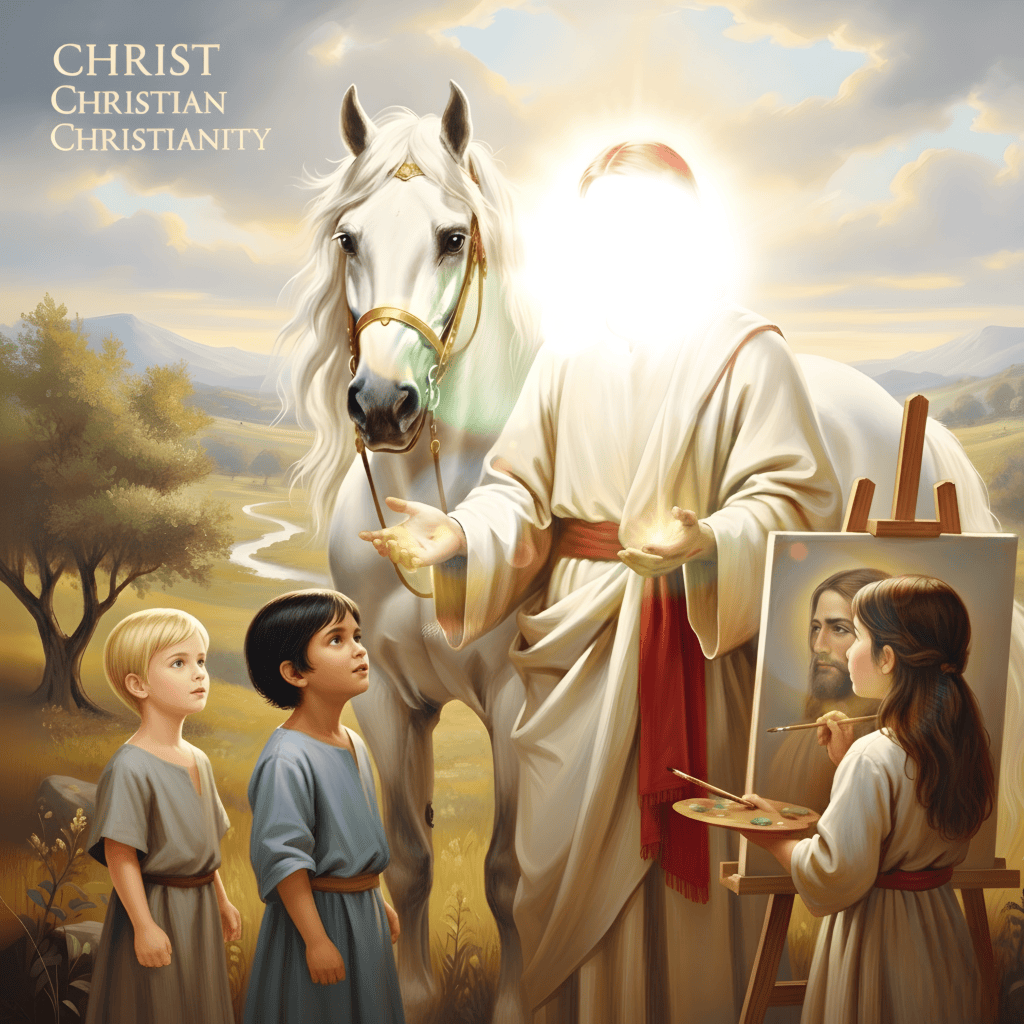
No matter the height you are blessed with, the melanin of your skin, the size of your skull, or the color of your iris or hair, we are all imprinted with His image and likeness. We are equal and significant. Genesis 1:27 affirms that every human being bears God’s image, granting all people inherent dignity and worth regardless of physical or external differences. This truth stands against any form of discrimination and highlights the fundamental equality of all humanity.
Psalm 34:8 says, “Oh, taste and see that the Lord is good; blessed is the man who takes refuge in Him.”
I believe it is valuable to think critically, to be rational, and to question faith, because I have witnessed and heard of events so extraordinary and inexplicable that sometimes they seem irrational. The chances are so slim that their occurrence may only be described as miraculous. As the recent viral Christian saying goes: WHATEVER YOU DO; DON’T LOSE JESUS CHRIST.
The Problem of Pain
To some, it all seems like a fairy tale – why?
Why do atheists protest – If Christ, the God is good, why war? Why disease? Why the concept of hell? These questions weigh heavy, as they should. But the comparison is not foreign: to ask why evil persists is like asking why darkness exists alongside the sun. Evil is the absence of God’s goodness, just as shadow is the absence of light. The light exists nonetheless – blazing, steadfast.
Cold is defined as the condition resulting from the absence or reduced presence of thermal energy in a system, since heat manifests as molecular motion and energy. In other words, cold is just heat taking a respectful sabbatical – when energy decides to temporarily pack its bags, the temperature inevitably takes a well-deserved plunge. Just as the absence of heat causes cold, so too does the absence of Christ allow the dwelling of evil.
This world, with its tears and tragedies, is not heaven, it is the proving ground of our souls. The cry of a newborn is life’s earliest lament, yet through pain, character is shaped, resilience is born, and compassion is awakened. As Paul writes in Romans 8:18, “I consider that our present sufferings are not worth comparing with the glory that will be revealed in us.”
Equal Bearers of Glory
So let us return again to Genesis 1:27, in light of what Christ wants and what Christianity is all about. It is not poetry for sentiment’s sake. It is defiance against discrimination, against caste or race or rank. It is humanity’s constitution, written on the very first page of Scripture. No matter the shade of skin, line of ancestry, or span of education – all carry Christ’s likeness.
To deny this is to misrepresent Christ. To embrace it is to glimpse the kingdom of heaven breaking into earth. Taste and see, as the psalmist pleads, that the Lord is good ( refer Psalm 34:8, Psalm 118:1, also repeated in Psalm 107:1 and Psalm 136:1, Psalm 145:9 and Psalm 23 ). And in His goodness, know this – whatever shadows linger now, His image remains radiant within us still.
“The Lord is good to all, and his mercy is over all that He has made.” (Psalm 145:9)
(to be continued in three parts …)
~ J George Thomas


Leave a Reply